French television, a charity auction, news from Dokeo and a behind-the-scenes look at the park
When art becomes a sanctuary
To mark World Elephant Day, celebrated every year on 12 August, the Mekong Elephant Park is launching its very first special auction featuring a truly unique collection.
For this initiative, French visual artist Sooig chose to collaborate with Mr Mong, the bamboo artisan at Mekong Elephant Park.
Their collaboration has resulted in a collection of six original works, each of which reflects a dialogue between two cultures, two perspectives and two artistic traditions.
Each piece combines Sooig’s creative vision with Mr Mong’s patient craftsmanship, resulting in works that celebrate a form of expression, local heritage and the natural world. Through this collection, Sooig sought to build bridges: between France and Laos, between art and nature, and between all those wishing to contribute, in their own way, to the protection of elephants.
Choosing one of these creations is much more than simply acquiring a work of art. It means playing a part in protecting elephants, supporting local communities and encouraging an approach where art becomes a genuine driving force for conservation.
Bidding is entirely anonymous and takes place via an online form.
🗓️ You have until12 August, World Elephant Day, to place your bid.
The successful bidders will be contacted directly after the auction to arrange collection of their piece. They will also be announced in our August newsletter.
Please note: Due to current shipping constraints, the artworks cannot currently be shipped to the United States. We greatly appreciate the understanding of our supporters in the USA.
“Choosing one of these works means offering a refuge to living things… but also to an artistic creation born of the meeting of two cultures.”
The rainy season:
a time for building… and replanting
Whilst nature reasserts itself fully during the green season, it is also a time when the entire team at Mekong Elephant Park is hard at work preparing for the months ahead.
Over the past few weeks, a great deal of work has been carried out across the park: refurbishment of the restaurant, replacement of the roofs on the bungalows and Mae Kham’s shelter, improvements to the mahouts’ houses, maintenance of the fences…
All these projects are essential to ensure we can continue to welcome our visitors in the best possible conditions and provide a pleasant environment for both our teams and our elephants.
But the rainy season is also the ideal time to give back to nature what it provides us with. We have therefore begun replanting numerous banana trees, a precious resource whose leaves and trunks form part of our elephants’ daily diet. In just a few more months, they will already be able to enjoy them.
Two years ago, thanks to your visits and donations, we were able to purchase a a small utility tractor. Since then, it has become an indispensable part of the park’s daily operations. It is used to deliver bananas to the elephants, transport equipment, tools, and building materials, and support the many construction and maintenance projects carried out across the sanctuary. A simple yet invaluable asset that makes our team’s work significantly easier and has a real impact every single day.
All in all, at Mekong Elephant Park, there’s always something to do! Whilst the elephants are making the most of the season, we’re rolling up our sleeves to maintain, repair, build… and prepare for what lies ahead.
Dokeo has entered musth
Since the start of the month, Dokeo has entered musth, a completely natural phase experienced by adult male elephants. For him, this is an excellent sign: his weight gain, good physical condition and adaptation to Mekong Elephant Park have enabled his body to return to this normal state.
During musth, testosterone levels rise sharply. Males become more territorial, more unpredictable and can pose a danger both to other elephants and to the people around them. Those who have met Dokeo before may be surprised by this change. Normally calm, gentle and friendly, he temporarily behaves very differently during musth. It is also the first time our team has experienced this natural stage alongside him.
As a safety precaution, Dokeo will therefore spend a few weeks away from the rest of the herd until this period is over. This is a natural part of a male elephant’s life, and our teams are trained to support him in the best possible conditions, whilst ensuring his wellbeing.
It is worth reminding that the first sign of an elephant in musth is discharge (or ‘sweating’) from the temporal glands, located between the eyes and the ears. Dokeo is no exception and is also displaying this characteristic symptom.
Males are often overlooked in rescue programmes. Periods of musth make their care more complex and sometimes lead sanctuaries to prioritise females. At Mekong Elephant Park, we have made a different choice: to offer a second chance to all elephants, without distinction.
Dokeo’s rescue is a fine example of this. Today, seeing him enter musth is, in fact, excellent news: it is a sign that he is gradually returning to a life as an elephant, with all the natural behaviours that go with it.
Mekong Elephant Park Featured on French National Television
We are delighted to share that Mekong Elephant Park has been selected for a short feature on France 2, one of France’s leading national television channels. The report highlights our elephants, our mahouts and the dedicated team working every day to provide rescued elephants with a better future. It is a wonderful opportunity to bring our conservation mission to a wider international audience and raise awareness of ethical elephant tourism.
We look forward to sharing the report with you once it becomes available online. Thank you for being part of this journey.
This recognition belongs to all of you who continue to support our work.💚
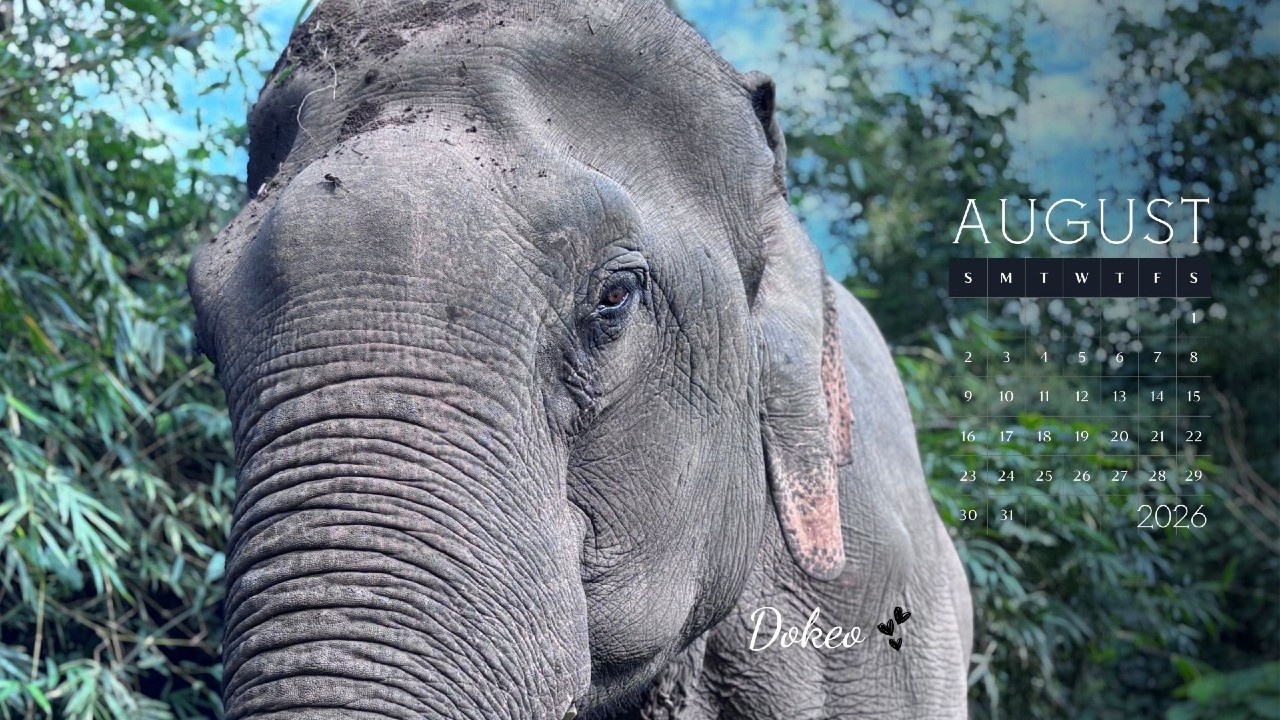
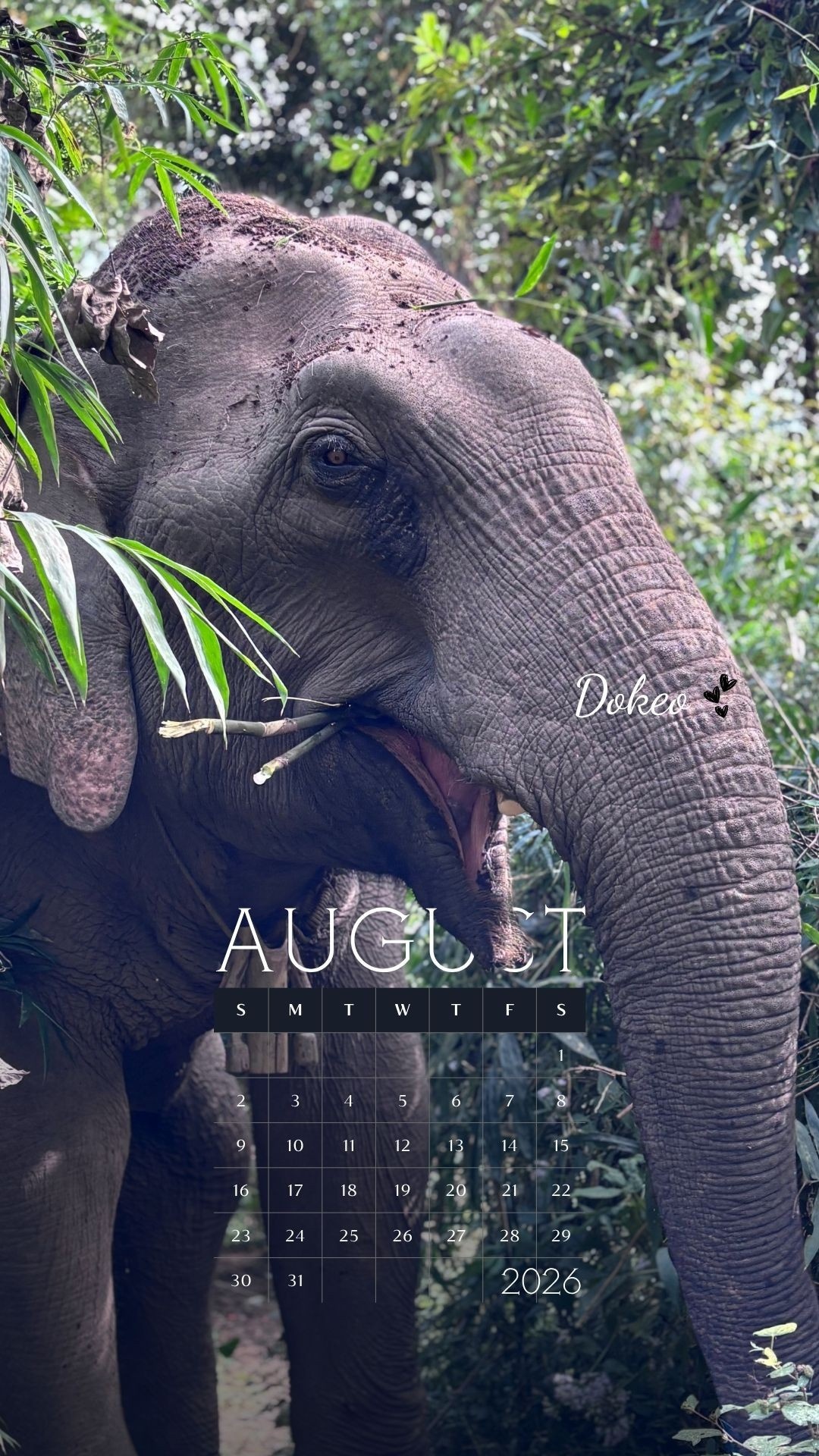
Wallpaper of the month
This month, our wallpaper features Dokeo. Having been rescued almost two years ago, seeing him now entering a period of musth is an encouraging sign: it shows an elephant gradually regaining all the natural behaviours of his species. A wonderful way to celebrate how far we’ve come… and to remind us that every elephant deserves a second chance.